Let’s Talk About Stimming and Autism
If you’ve ever seen a child flap their hands when they’re excited, rock back and forth when they’re upset, or hum softly while they play — you’ve seen stimming. Short for “self-stimulatory behavior,” stimming is something we all do to some degree. Think about tapping your pencil, twirling your hair, or bouncing your knee under the table. These are all ways we help ourselves stay calm, focused, or emotionally regulated.
For autistic people, stimming can play an even bigger role. It’s often more visible, more frequent, and more essential.
And most importantly? It’s not something that needs to be fixed.
Let’s explore what stimming is, why it matters, and how we can respond with understanding and acceptance — not shame.
What is stimming?
Stimming is any repetitive behavior that helps a person regulate their body or emotions. For autistic individuals, these behaviors can be a vital tool for managing sensory input, expressing excitement or distress, processing emotions, or simply feeling grounded.
Stimming might look like:
- Hand flapping
- Rocking or spinning
- Repeating words or sounds (echolalia)
- Tapping fingers, jumping, or pacing
- Staring at lights or patterns
- Chewing on objects
- Making repetitive noises
Sometimes stimming is subtle. Sometimes it’s big. Sometimes it happens in joyful moments — other times during stress or overwhelm. But in every case, stimming has a purpose.
Why do autistic people stim?
There are many reasons someone might stim, including:
- Self-regulation: Calming the nervous system during stress or anxiety
- Excitement: Expressing big emotions like happiness or anticipation
- Sensory processing: Creating predictable input in a world full of unpredictable sensations
- Focus: Helping maintain attention or tune out distractions
- Comfort: Providing a familiar, soothing rhythm when the environment feels overwhelming
Rather than trying to stop stimming, we can shift our mindset and ask: What is this behavior telling me? What does this person need right now?
Is stimming bad?
Absolutely not. Stimming is a natural and important part of being human — especially for autistic people.
The only time stimming may need support is when it becomes unsafe (like head banging or biting) or when it interferes with a child’s ability to engage in something they want to do (like playing, learning, or interacting). Even then, the goal isn’t to eliminate stimming — it’s to understand the need behind it and offer safer or more effective alternatives.
Suppressing or punishing stimming can increase anxiety and cause harm. When we try to “stop” a stim without understanding it, we’re often asking someone to hide a part of themselves just to make others more comfortable.
How can we support stimming in a healthy, respectful way?
The answer starts with acceptance. Here’s how you can support your child (or any autistic person) when it comes to stimming:
- Don’t shame it. Reassure your child that it’s okay to stim. Even saying, “I see you’re flapping your hands — are you feeling excited?” can help normalize the behavior.
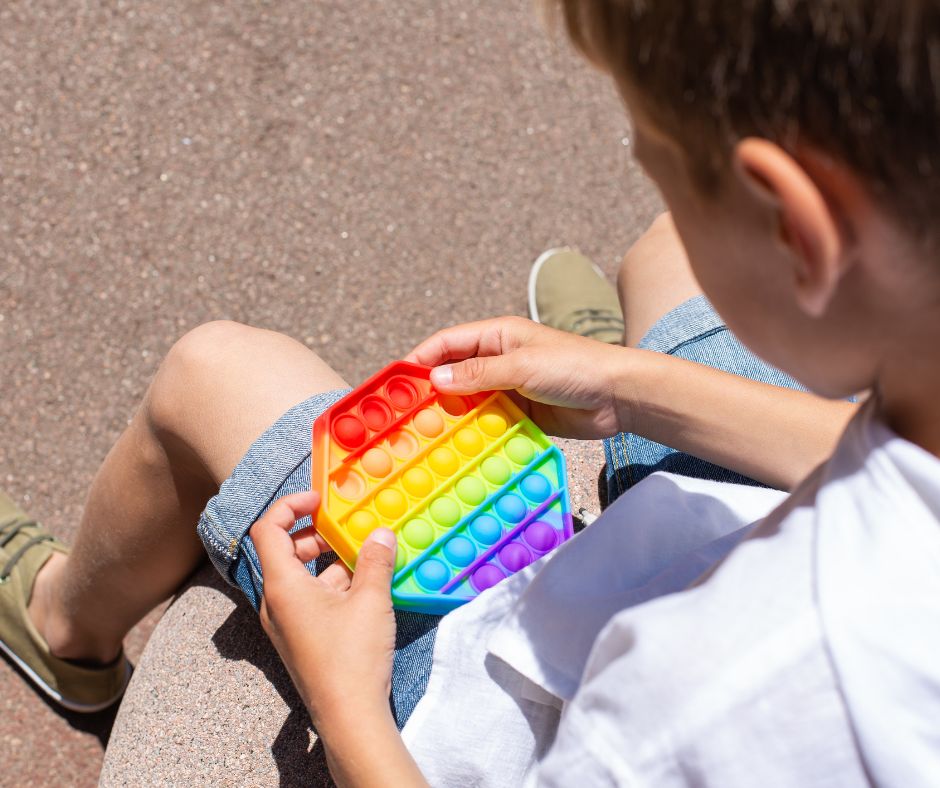
- Create a safe space. Make sure your child has access to tools that help them regulate — chewies, fidget toys, weighted items, or a quiet corner.
- Observe, don’t interrupt. Notice when and why your child stims. Is it always in loud places? During transitions? When they’re excited? Those patterns offer valuable insight.
- Offer alternatives when needed. If a stim is harmful, help your child find a similar action that meets the same need (e.g., switching from head banging to bouncing on a therapy ball).
- Advocate for acceptance. Educate others who may not understand. The more people who know that stimming isn’t “bad behavior,” the safer the world becomes for neurodivergent kids and adults.
Stimming is self-expression. It’s self-regulation. It’s self-love.
When we embrace stimming for what it is — a beautiful, powerful part of neurodivergent communication — we help autistic kids feel seen, safe, and celebrated.
Instead of saying, “Stop that,” we can say, “I see you,” and mean it.