Funny Things Occupational Therapists Do… That Actually Really Help
If you’ve ever peeked into an occupational therapy session, you might have wondered, Wait… why is that therapist crawling on the floor? Or Did they just make an obstacle course out of couch cushions and painter’s tape?
Occupational therapists (OTs) are known for doing some pretty funny, unexpected things in the name of child development. But behind every silly-looking activity is a mountain of clinical knowledge, purposeful strategy, and love for helping kids grow.
So, let’s have a little fun and celebrate some of the wonderfully weird things OTs do — and why they actually work!
They “walk like a bear” down the hallway.
Why it’s funny: You’ve got a grown adult on all fours, marching across the floor like they’re heading to the forest.
Why it helps: Bear walks build core strength, coordination, and body awareness — all of which are essential for sitting still in class, writing, and navigating playground equipment.
Plus, it makes kids giggle… and when kids are laughing, they’re learning.
They turn everything into a game.
Why it’s funny: Need to work on grasp strength? Let’s use tongs to rescue tiny dinosaurs from a bubble swamp. Practicing handwriting? Why not write on a mirror with shaving cream?
Why it helps: Play is a child’s most natural way of learning. By disguising hard work as fun, OTs keep kids engaged and motivated while targeting very specific developmental goals.
They ask kids to “crash into pillows.”
Why it’s funny: Most adults discourage jumping on the couch… but OTs? They might encourage it (with supervision, of course!).
Why it helps: All that crashing, jumping, and squeezing provides deep pressure input to the joints — which helps regulate the sensory system. It can calm a child who’s feeling overwhelmed or rev up a child who needs help staying alert.
Also, it’s just a really good time.
They have swings in their therapy rooms.
Why it’s funny: Some therapy rooms look more like playgrounds than clinics. A swing hanging from the ceiling? A scooter board race track? Yes, please.
Why it helps: Movement is medicine! Swings help with vestibular input (our sense of balance and motion), which supports coordination, attention, and emotional regulation.
And when a child feels calm and centered, they’re more ready to take on the world — or at least their next puzzle.
They have an endless supply of stickers, squishies, and kinetic sand.
Why it’s funny: OTs have Mary Poppins bags filled with the weirdest treasures — and they pull them out at just the right moment.
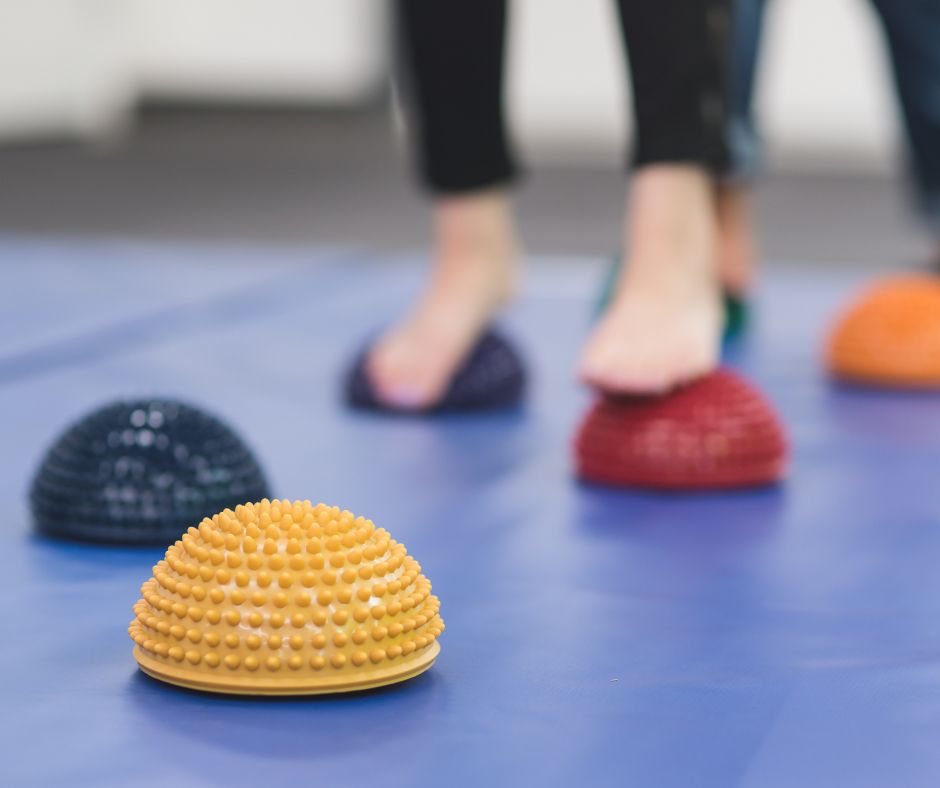
Why it helps: Textures like slime, playdough, and sand help with tactile exploration and desensitization. Squishy toys and fidgets support focus. Stickers and crafts improve fine motor control. Every “fun” item has a therapeutic purpose.
And somehow, kids never get tired of them.
They sit on exercise balls and roll around during sessions.
Why it’s funny: Picture this: a therapist bouncing on a giant yoga ball, high-fiving a kid every time they roll past.
Why it helps: Core strength and postural control are key for writing, sitting at a desk, and participating in school routines. Bouncing and balancing build those muscles in a way that feels like play, not work.
Bonus: It’s a great workout for the therapist, too!
They cheer for things like tying shoes or zipping jackets like it’s the Super Bowl.
Why it’s funny: You’d think a child just climbed Everest the way their OT celebrates a successfully tied shoelace.
Why it helps: Daily life skills (also called “occupations”) are the heart of OT. For many kids, tasks like getting dressed or opening snack containers take real effort. Celebrating these wins helps build confidence and independence.
And honestly? They are worth cheering for.
They look like they’re just playing… but they’re changing lives.
Why it’s funny: To someone passing by, therapy might look like recess. There’s laughter, noise, silly games, and sometimes even messes.
Why it helps: Occupational therapists are masters of turning everyday moments into opportunities for growth. They see potential in cardboard boxes, sidewalk chalk, and pool noodles. They meet kids exactly where they are and help them reach goals that once felt impossible — all through play, patience, and deep knowledge.
So yes, occupational therapists do some funny things.
They jump, crawl, spin, stretch, and get messy. They sing silly songs and make obstacle courses out of chairs and couch cushions. But every “funny” thing they do is backed by purpose and passion.
Because underneath it all, their goal is simple: to help children feel capable, confident, and proud of who they are.
And sometimes, that starts with bear walks and belly laughs.