Getting Dressed, Brushing Teeth, and More: Helping Kids Master Daily Routines
If you’ve ever found yourself negotiating over socks, reminding your child for the fifth time to brush their teeth, or chasing them around the house with a hairbrush — you are absolutely not alone.
Daily routines like getting dressed, brushing teeth, or putting on shoes may seem simple to us as adults, but for kids (especially those with developmental differences), these everyday tasks can be surprisingly complex. They involve fine motor skills, sequencing, sensory processing, attention, and sometimes a lot of patience — from both you and your child.
The good news? With the right support, practice, and a whole lot of encouragement, kids can grow more independent and confident in their routines. And it doesn’t have to be stressful.
Let’s walk through some compassionate, practical ways to help your child build these skills — one step at a time.
Start Where They Are
The first step is to notice what your child can do — and build from there. Some children may be able to take off their socks but struggle to put them back on. Some may brush their teeth but forget to rinse. That’s okay.
We’re not aiming for perfection; we’re aiming for progress.
Break the task into small, manageable steps and focus on mastering one part at a time. For example:
- “Let’s practice just getting your arms into your shirt today.”
- “Can you open the toothpaste cap and I’ll help with the rest?”
- “I’ll put the shoes in front of you — can you try slipping them on?”
Every step they take toward independence is worth celebrating.
Use Visual Supports
Many kids — especially visual learners — benefit from pictures or checklists that show each step of a routine. These tools reduce overwhelm and create predictability.
You can create a simple chart with images (or take photos of your child doing each step) and post it near the bathroom mirror, bedroom, or wherever the routine happens.
It might look something like:
- Pick out clothes
- Put on underwear
- Put on pants
- Put on shirt
- Socks and shoes
- High-five when done! 🎉
Visuals help your child understand what’s expected and give them a sense of ownership. And when transitions feel tough, having a visual guide can feel grounding and reassuring.
Add Structure and Make It Fun
Routines don’t have to be rigid — but they do need to be consistent. Doing things in the same order, in the same place, and around the same time helps build predictability, which reduces stress for many kids.
And when you can add a little fun to the mix? Even better.
Try:
- Playing a favorite song during clean-up time
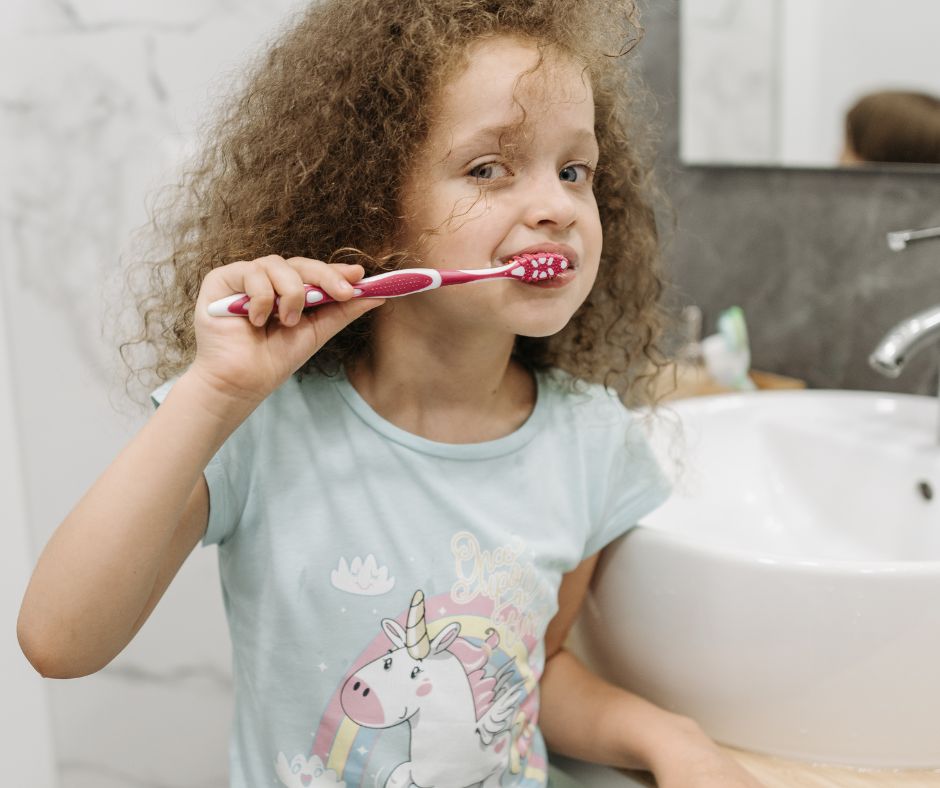
- Turning toothbrushing into a silly two-minute dance party
- Pretending to be robots or animals while getting dressed
- Using a timer to “beat the clock” in a playful way
The goal is to create positive associations with daily tasks — not power struggles.
Notice Sensory Needs
Some daily routines are tricky not because a child is being “defiant,” but because the experience itself is uncomfortable.
Think about:
- Toothbrushing: Is the toothbrush too firm? Is the taste or texture of the toothpaste overwhelming?
- Getting dressed: Do certain fabrics feel itchy, tight, or scratchy? Do socks bother them because of the seams?
- Bath time or hair brushing: Is the water too hot or cold? Does hair-pulling hurt more than we realize?
Occupational therapists are trained to help identify and support these sensory challenges, so if routines are consistently hard, don’t hesitate to reach out for guidance.
Offer Choices and Encourage Independence
Kids love to feel in control — and offering small choices can go a long way in reducing resistance.
Try:
- “Do you want to brush your teeth before or after pajamas?”
- “Red shirt or blue shirt today?”
- “Do you want to do it yourself first, or have me help?”
Even if they still need support, giving them a role builds confidence. And when we focus more on encouraging effort than perfect execution, they’re more likely to try again next time.
Celebrate the Wins — Big and Small
Did your child try putting on their socks without asking for help? Did they brush for 30 seconds longer than yesterday? Did they tolerate a new toothpaste or pull up their zipper?
That’s amazing.
Praise the effort, not just the outcome:
- “I saw how hard you worked on that — I’m so proud of you.”
- “You remembered the next step all on your own!”
- “You kept going, even when it felt tricky. That takes courage.”
When we focus on progress over perfection, we create a safe space for learning — one where mistakes are okay and trying is enough.
You’re Doing a Great Job
Supporting your child through daily routines can feel exhausting at times — especially when the same challenges pop up day after day. But you’re building something important: confidence, independence, trust, and connection.
It’s not about getting every step “right.” It’s about walking alongside your child with compassion and patience, cheering them on as they learn and grow.
One toothbrush, one sock, one little victory at a time — you’re helping them build skills they’ll carry with them for life.