Why Play Matters in Speech Therapy
If you’ve ever peeked into a speech therapy session and seen your child playing with toy animals, stacking blocks, or pretending to “cook” lunch with a play kitchen, you might wonder: Is this really therapy?
The answer is a joyful, wholehearted yes.
Because for kids, play is the work of learning — especially when it comes to communication.
Speech therapy isn’t just about practicing sounds or answering questions. It’s about building connection, confidence, and communication in ways that are meaningful to your child. And play is how we get there.
Let’s take a look at why play matters so much in speech therapy — and how it helps your child grow in ways that are deeper than they may seem.
Play is a Child’s First Language
Before a child says their first word, they play. They babble to dolls, roll cars across the floor, and pretend to talk on a toy phone. Play is how children explore their world, try out new ideas, and learn to express themselves — even before they have the words.
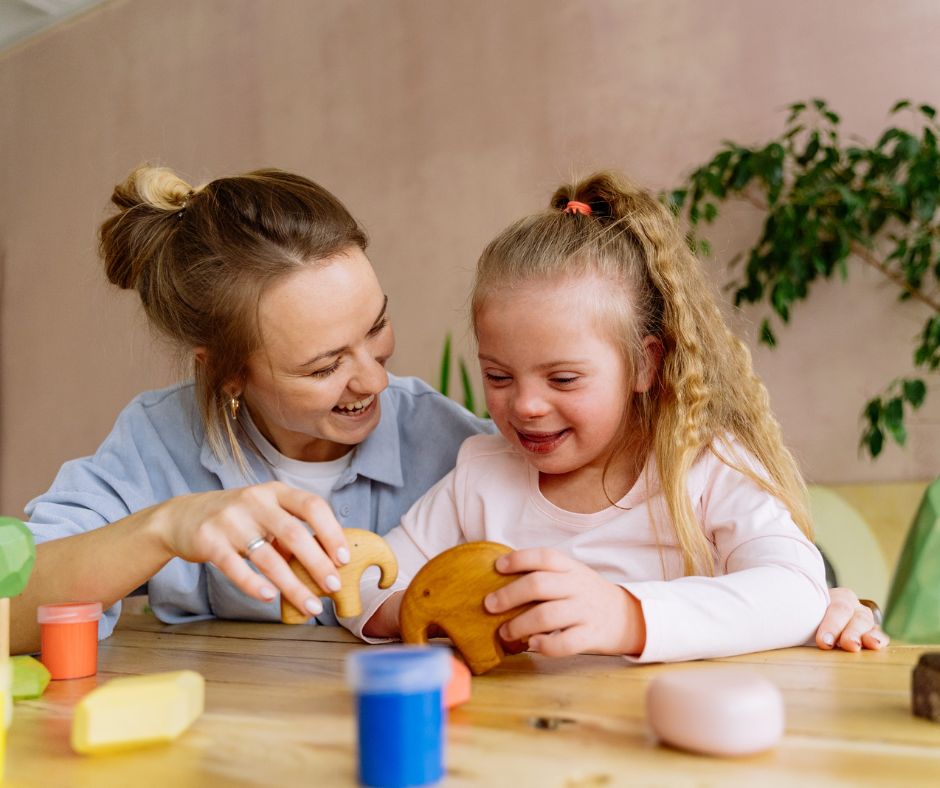
So when we meet a child in therapy, we meet them where they’re most comfortable: on the floor, with toys in hand, in a space where communication feels safe and natural.
Through play, a child learns:
- How to take turns
- How to express wants and needs
- How to understand what others are doing or saying
- How to follow directions and routines
- How to be curious and flexible
These are the foundations of strong communication — and play helps build them brick by brick.
Play Creates a Safe, Low-Pressure Space to Learn
Therapy shouldn’t feel like a test. And for many kids, sitting at a table and being asked questions doesn’t feel safe, fun, or motivating. That’s why we bring language learning into play — where the stakes are low, the laughter is real, and the learning sneaks in naturally.
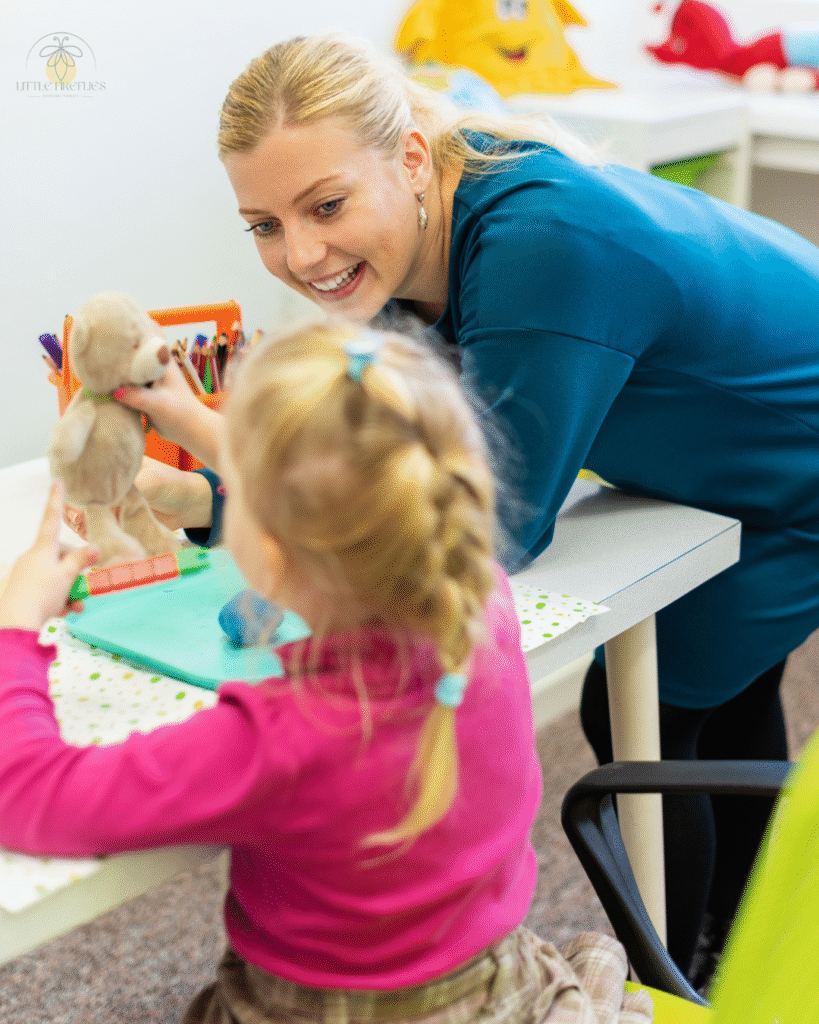
Through something as simple as pretending to feed a teddy bear or racing toy cars down a track, a child can practice:
- Vocabulary (“More banana?” “Go fast!”)
- Speech sounds (“B-b-bear!”)
- Social skills (“My turn, your turn”)
- Following directions (“Put the car under the bridge”)
And they often don’t even realize they’re “working” — because to them, it’s just fun.
Play Builds Relationship — And Relationship Builds Communication
At the heart of every speech therapy session is connection. Kids don’t just learn from repetition — they learn from people. From relationships. From feeling safe and seen.
When a therapist joins a child in their play, they’re saying:
“I see you. I get you. I want to share this moment with you.”
That connection opens the door for communication to grow. Because children communicate best when they feel connected — not when they feel corrected.
Different Kinds of Play Build Different Skills
Not all play looks the same — and that’s okay! Whether your child is lining up dinosaurs, engaging in a pretend tea party, or zooming around the room pretending to be a plane, there’s rich learning happening underneath the surface.
In speech therapy, we might use:
- Pretend play to build imagination, sequencing, and storytelling
- Cause-and-effect toys (like pop-up toys or wind-up cars) to teach requesting and turn-taking
- Books and puppets to support attention and engagement
- Movement-based play to help with regulation and focus
- Sensory play (like sand, water, or playdough) to reduce anxiety and support engagement
Every moment of play is a chance to notice, respond, expand, and connect — all core ingredients of communication.
You Can Support Speech Through Play at Home, Too
You don’t need to recreate therapy at home — just follow your child’s lead and sprinkle in some intentional communication as you go. Here are a few simple ideas:
- Narrate what your child is doing during play: “You’re building a tall tower!”
- Take turns and model simple language: “Car go! My turn!”
- Use favorite toys to practice sounds or words: “Moo! Cow says moo!”
- Repeat and expand: If your child says “truck,” you can say, “Big truck! Red truck!”
- Most importantly — just be with them. That connection is everything.
Play Isn’t a Detour From Speech Therapy — It Is Speech Therapy
It might look like bubbles and blocks. It might sound like giggles and growls. But underneath it all, powerful learning is happening.
Through play, your child is building language. They’re making connections. They’re learning to understand others and be understood.
And isn’t that the heart of what we all want?
So the next time you see your child in a speech therapy session stacking cups or roaring like a dinosaur, take a deep breath and smile — because they’re not “just playing.”
They’re growing.